
Deeds Recorded in Lancaster County
Recorded deeds and other land instruments in Lancaster County sit with the Circuit Court Clerk, the local custodian of the land books. A deed records a transfer or a stated interest in land. It does not prove the grantor held perfect title. Nor does it rule out every competing claim. The Lancaster deed records span a wide family of instruments: sale deeds, deeds of gift, deeds of trust, trustee and fiduciary deeds, correction deeds, quitclaims, plats, easements, covenants, partitions, and releases. Treat that list as a map of document families rather than exact index labels. The Clerk can confirm the instrument name that appears on any recorded document.
| Deed Type | What It Does | Common Use |
|---|---|---|
| Deed of bargain and sale | Conveys the land interest named in the instrument | Sale or transfer |
| Deed of gift | Records a no-sale or family conveyance | Gift or estate planning |
| Quitclaim or correction deed | Transfers a stated interest or corrects an earlier description | Interest cleanup or record correction |
| Trustee or fiduciary deed | Shows a transfer by a trustee, executor, or administrator | Trust, probate, or court process |
| Deed of trust | Secures a loan and names borrower, lender, and trustee | Mortgage or financing |
A transfer deed and an encumbrance are different records. A deed of trust secures a debt. A certificate of satisfaction or release shows that the obligation was later discharged. Easements, rights-of-way, covenants, judgments, mechanics' liens, lis pendens, and tax liens can all affect use or title. They do this without changing the owner name on a GIS map. Read each deed alongside the later releases and any related court orders.
Follow the Lancaster County Grantor-Grantee Chain
A grantor transfers an interest. The grantee receives it. To trace a chain in Lancaster County, start with the present grantee on the latest deed, note the grantor, then search that earlier name as a grantee in the prior instrument. At every step, compare the legal description, acreage, adjoining owners, date, and book/page. Online search fields and any date cutoff vary. At the counter, ask the Clerk which index spans and search modes cover the parcel.
- Locate the latest recorded conveyance and note its book/page or instrument number.
- Read the grantor and legal description from that deed.
- Search the prior owner as grantee, then compare the land description and transfer date.
- Repeat until a known earlier deed, estate transfer, or historic book supplies the next link.
- Grantor
- The person or entity transferring the interest.
- Grantee
- The person or entity receiving the interest.
- Chain of title
- The linked series of recorded transfers for one parcel.
- Book and page
- A volume and page reference; retain it when asking for a copy.
Request a Lancaster County Deed Copy
The Clerk's official page names Diane H. Mumford and gives the office at 8265 Mary Ball Road, phone (804) 462-5611, with mail sent to P.O. Box 99, Lancaster, VA 22503. Mail does not reach the street address. A written request should go to the post office box. It should include the grantor and grantee names, an approximate date, and the book/page or instrument number if known. Ask whether the copy can be certified, and confirm the current local charge before sending payment.
Virginia Code §17.1-275 sets recording fees of $18 for an instrument of ten or fewer pages and $32 for 11-30 pages. Instruments of 31 pages or more cost $52. Larger plats are charged separately. The cited copy schedule provides $0.50 per page or image. Remote access under §17.1-276 may cost up to $50 per subscriber per month plus image or convenience fees. These are statutory anchors, not a promise of Lancaster's current counter total. Confirm charges and certification steps with the Clerk.
Keep the original recording charge separate from the cost of a copy or certified copy. Also separate is any map or plat attached to the instrument. A short instrument may total differently from a deed with exhibits or a large survey. The statewide SRA subscriber arrangement also does not establish that Lancaster offers an online index. It does not guarantee image access to every user. Give the Clerk the names, approximate date, and parcel description. Staff can then identify the record and quote the proper current charge.
Recorded, not guaranteed. A Lancaster County deed shows an instrument accepted for record, not a title opinion. Ask a title professional to examine the full chain, releases, liens, and any unrecorded interest.
Virginia SRA and Lancaster County Images
Virginia's Secure Remote Access page states that land-record data may be available through COVERS. The basis is Va. Code §17.1-294. Free index-only access depends on a clerk enabling it. Images stay restricted to subscribers the clerk authorizes, through a signed agreement and payment. The statewide notice does not settle Lancaster's participation, image availability, or earliest searchable year. Read it as an explanation of the access model. Then confirm the county's status with the Clerk before relying on it. The Virginia SRA land-record notice explains the difference between index access and image access. It displays no Lancaster deed record and sets no online cutoff.
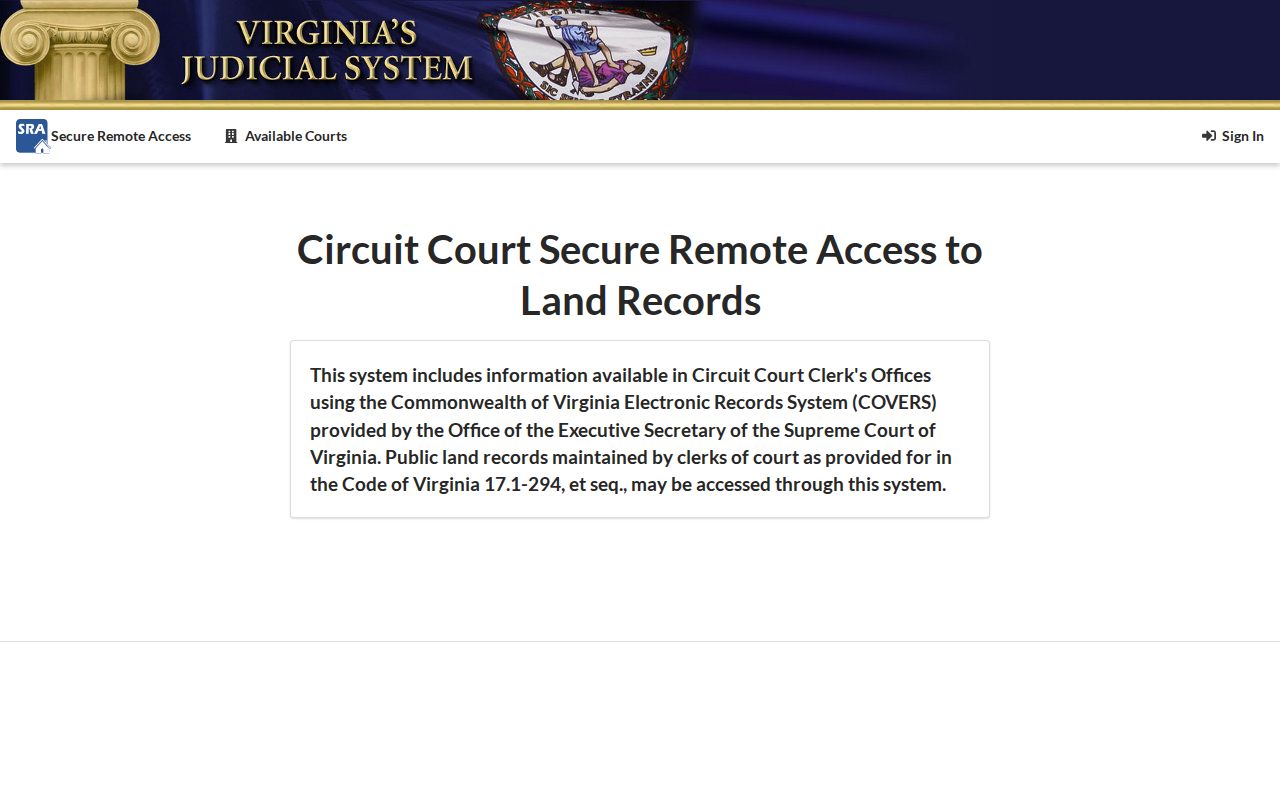
A statewide portal can still leave local questions open. For a specific Lancaster conveyance, the county clerk remains the confirmation point.
What to Ask About Lancaster County Deed Index Fields
When contacting the clerk, ask whether the deed index can be searched by grantor, grantee, document number, date range, instrument type, book/page, or legal description. State the parcel's current and prior owner names if known. A name may be indexed under a business, trustee, executor, or estate fiduciary. It may not appear under an individual's common name. Keep a written record of each result. Note the parties, recording date, instrument type, land description, and book/page. If no online image exists, request a copy from the Clerk. The statewide case-information site is not a complete land-record index. Virginia has no single online circuit-court search covering every locality. The Lancaster Circuit Court page supplies local contact details. The statewide case-information hub describes how locality coverage varies.
Lancaster County Deed Books Begin in 1652
Lancaster County formed in 1651. Its deed record runs deep. The Library of Virginia reel list opens with Deeds, Etc. No. 1, 1652-1657, then continues through early deed, court, will, tax, and fiduciary records. A 1652-1793 deeds and wills finding aid spans 37 volumes. It covers 9,394 pages across reels 1-7. The contents reach far beyond simple sales. You will find deeds of gift and bargain and sale. You will also find leases and releases, wills, inventories, appraisals, estate accounts, sales, settlements, and guardians' accounts. That range matters when a parcel's chain runs through an estate or a family transfer rather than a straight line of sales.
Microfilm copies of these volumes exist. The finding aid does not reproduce the manuscripts online. The Library of Virginia also notes that some reel ranges are unavailable through interlibrary loan. Dunton Library holds microfilm dating from 1651. It also holds indexes and abstracts of the courthouse records. Visits run by appointment. Microfilm equipment availability can change, so call before making a trip.
Use the Library of Virginia catalog to identify the reels. The Dunton Library answers questions about local holdings. The Lancaster microfilm finding aid on the Library of Virginia site serves as a reel-level guide to deeds, wills, court, tax, and related records.
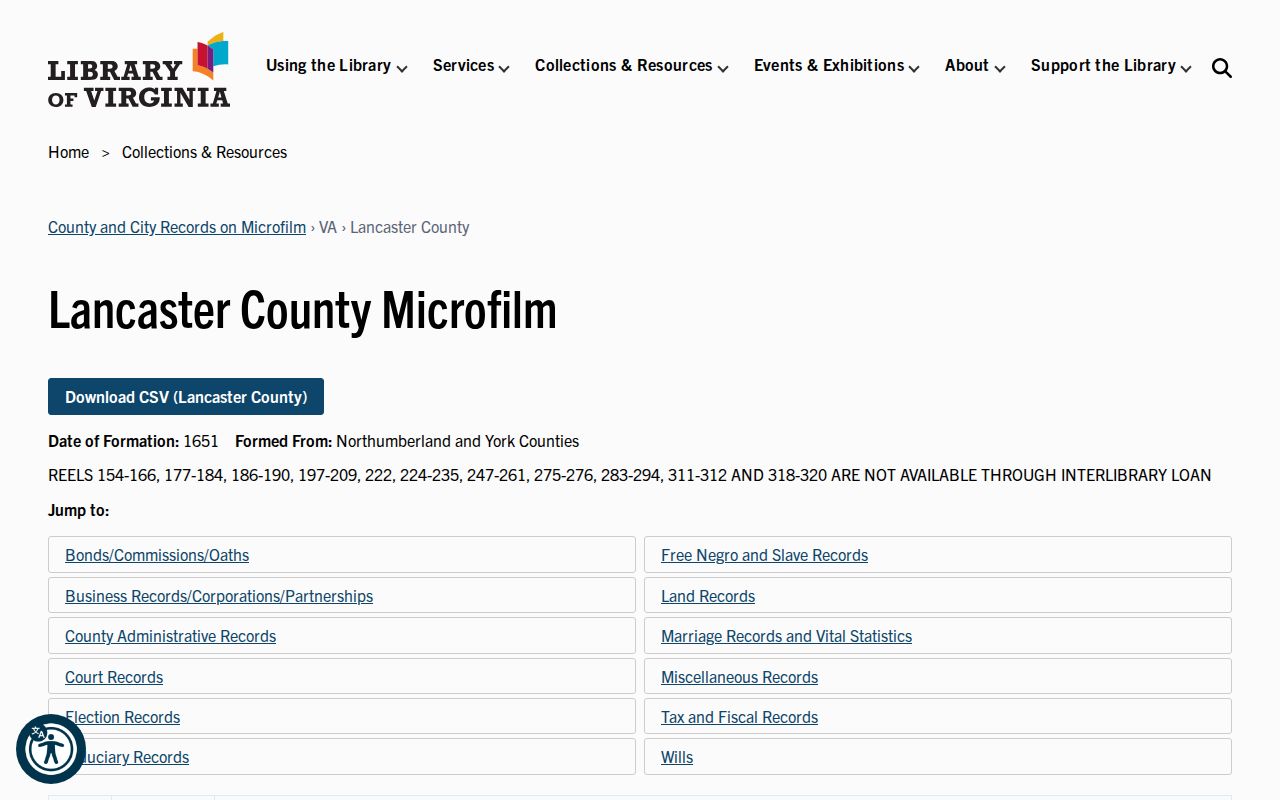
Match the book and date range before asking a library or archive to pull a reel.
Probate Transfers in Lancaster County Deeds
Not every change of ownership started at a market sale. A will, an intestate estate, a partition, or a court order can explain why the GIS owner of record differs from the deed grantee. Executor and administrator deeds do the same. Search the Circuit Court records under the decedent, the fiduciary, the heirs, and the property description. Probate files may hold inventories, appraisals, accounts, sale orders, beneficiary names, and a later deed.
The local historical society's Estate Records Project abstracts 1,343 documents from 1835-1865, spanning 520 decedents, 1,755 beneficiaries, and 318 spouses. Those abstracts can point you toward a file. Even so, the recorded deed and the probate papers remain the source documents. For recent estates, contact the clerk; Lancaster County publishes no online probate index field list or local copy-fee schedule.
Lancaster County Deeds and Recorded Liens
Once you locate a conveyance, keep going. Comb the land records for anything touching the parcel. A deed of trust is often followed by a certificate of satisfaction or release. Easements and rights of way can fix a lasting use right. Covenants and subdivision declarations may shape what a lot allows. A judgment, mechanic's lien, tax lien, or lis pendens can signal trouble. It may mark a live claim or case. Search the parties to the property. Also search the lenders, trustees, claimants, and fiduciaries behind each instrument.
Check any release against the instrument and parcel description it answers. A payment screen will not prove a lien was released. Nor will a map prove a right of way is absent. For the fuller court story behind a lien, turn to the Circuit Court Clerk. The local case file holds the rest.