
Trace Earlier Lancaster County Property Owners
Work the grantor and grantee chain in reverse. When an index runs dry, deed books and courthouse microfilm take over. Lancaster's online indexes lack a firm start year. The historical dates are solid, though. Lancaster County formed in 1651, early deed books open in 1652, and Dunton Library reports courthouse microfilm from 1651. A legal description often bridges older records better than a modern street number.
| Source | Years It Covers | Where Held | What It Shows |
|---|---|---|---|
| Current land records | Online cutoff not located | Circuit Court Clerk; SRA if enabled | Recorded parties and land instruments |
| Early deed and order books | From 1652; book runs vary | Library of Virginia microfilm catalog | Grantor, grantee, land, wills, and court entries |
| Deeds and wills collection | 1652-1793 | 37-volume collection; reels 1-7 | Deeds, wills, inventories, estates, accounts |
| Local courthouse microfilm | From 1651 | Dunton Library, by appointment | Local records and indexes |
Start with the newest deed. Work backward while its instrument references hold up. For earlier decades, the Library of Virginia catalog identifies the exact reel; ask the Clerk or Dunton Library about viewing it. Old instruments rely on metes and bounds, watercourses, roads, acreage, and adjoining owners rather than a current address.
Reconstruct a Lancaster County Deed Chain
A backward chain begins with the current grantee. Find the deed that vested today's interest. That deed names the prior grantor, so search that owner as a grantee next, comparing the land description and date to confirm the same tract. Keep going through conveyances, wills, partitions, and fiduciary deeds. Boundary changes matter too. When an online index is absent or ends, the clerk and reel catalogs are the next source, not a reason to stop.
- Record the latest grantee, grantor, date, book/page, and legal description.
- Search the grantor's name as a grantee in the earlier period.
- Compare acreage, adjoining owners, road or water references, and survey details.
- Follow estate, partition, or fiduciary instruments where the next transfer is not a sale.
- Move to the relevant deed-book reel when the clerk's online index does not reach the period.
- Grantor
- The party that transferred the interest in a recorded instrument.
- Grantee
- The party that received the interest.
- Chain of title
- The ordered links of recorded transfers affecting one tract.
- Legal description
- A land description that can identify a tract when street names change.
How Far Back Lancaster County Ownership Reaches
The county was formed in 1651, and early deed and order books begin in the 1650s. The Library of Virginia lists Deeds, Etc. No. 1 for 1652-1657, then later early volumes and a 1652-1793 deeds-and-wills collection. No courthouse fire or major land-record loss was located in the reviewed finding aids, but that does not prove every volume survives. Check the reel catalog and Clerk before treating a missing reference as a gap in ownership.
For an early deed, record the book title, volume, page or folio, index type, and reel number before requesting a copy. Catalog notes describe some books as unpaged or indexed at the end, and some reels are not available through interlibrary loan. A grantor index and a grantee index answer opposite sides of the same transfer; search both when a surname variant or a fiduciary role interrupts the chain.
Online cutoff not confirmed. Lancaster's earliest online index year was not located. Ask the Clerk which years are searchable remotely, then continue with deed books or microfilm for earlier owners.
Early Lancaster County Deed Books
The Library of Virginia lists a run of early Lancaster County land books: Deeds, Etc. No. 1 for 1652-1657, No. 2 for 1653-1702, No. 4 for 1666-1682, No. 6 for 1682-1687, Record Book No. 7 for 1687-1700, No. 9 for 1701-1715, and Deeds and Wills No. 12 for 1726-1736. Some catalog entries mention grantor and grantee indexes, unpaged books, or indexes repeated at the end. Pin down the right volume and index before hunting for a specific page.
The Dunton Library local-history page describes its courthouse microfilm and research access.
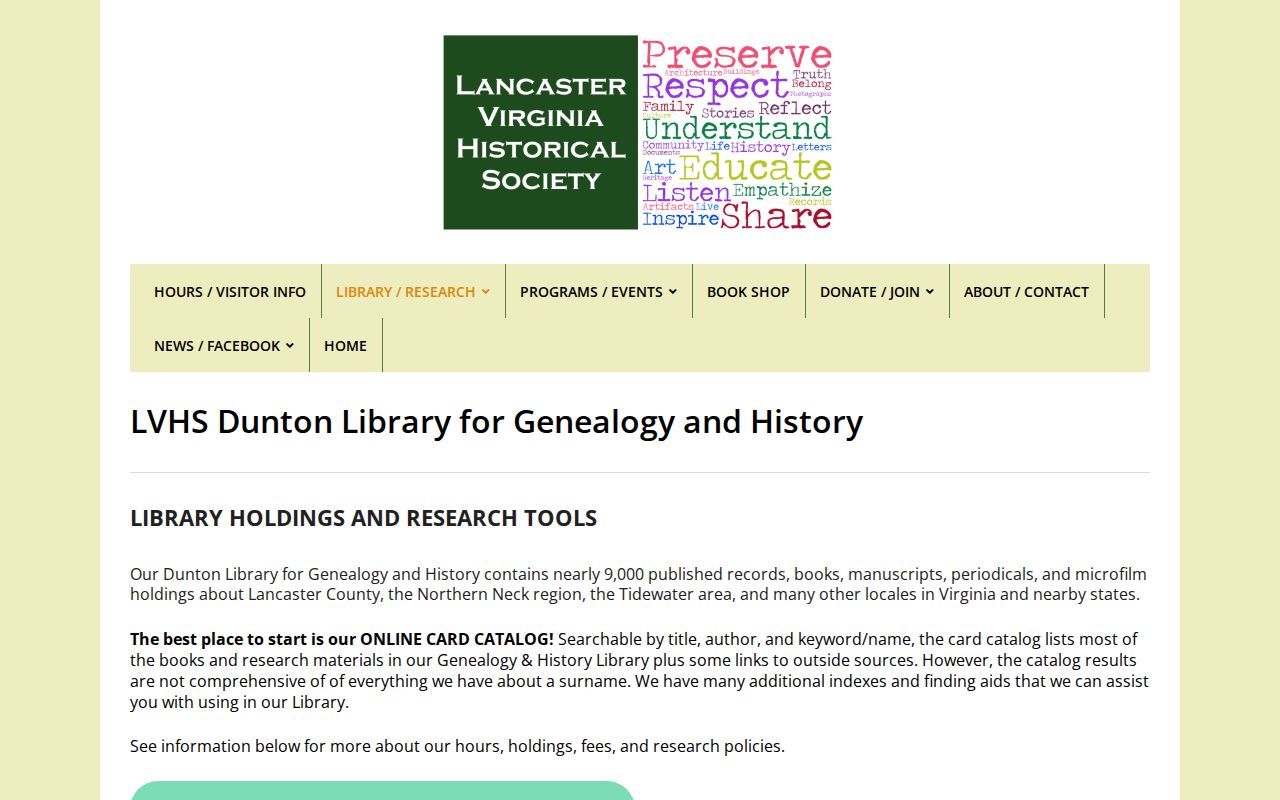
One practical tip before you go: the Dunton Library page reported its microfilm equipment unavailable in August 2025, so call ahead.
Lancaster County's 1652-1793 Records Collection
The finding aid describes 37 volumes and 9,394 pages. This is not a simple run of conveyance deeds. Leases and releases, deeds of gift, and bargain-and-sale instruments sit alongside wills, inventories, appraisals, and estate sales. Accounts, settlements, and guardians' accounts round out the mix. Such papers capture family and estate events that moved land without a standard purchase deed. The originals live at the Library of Virginia State Records Center. Microfilm copies exist. The full collection is not online.
The Lancaster 1652-1793 finding aid lists the contents and microfilm access.
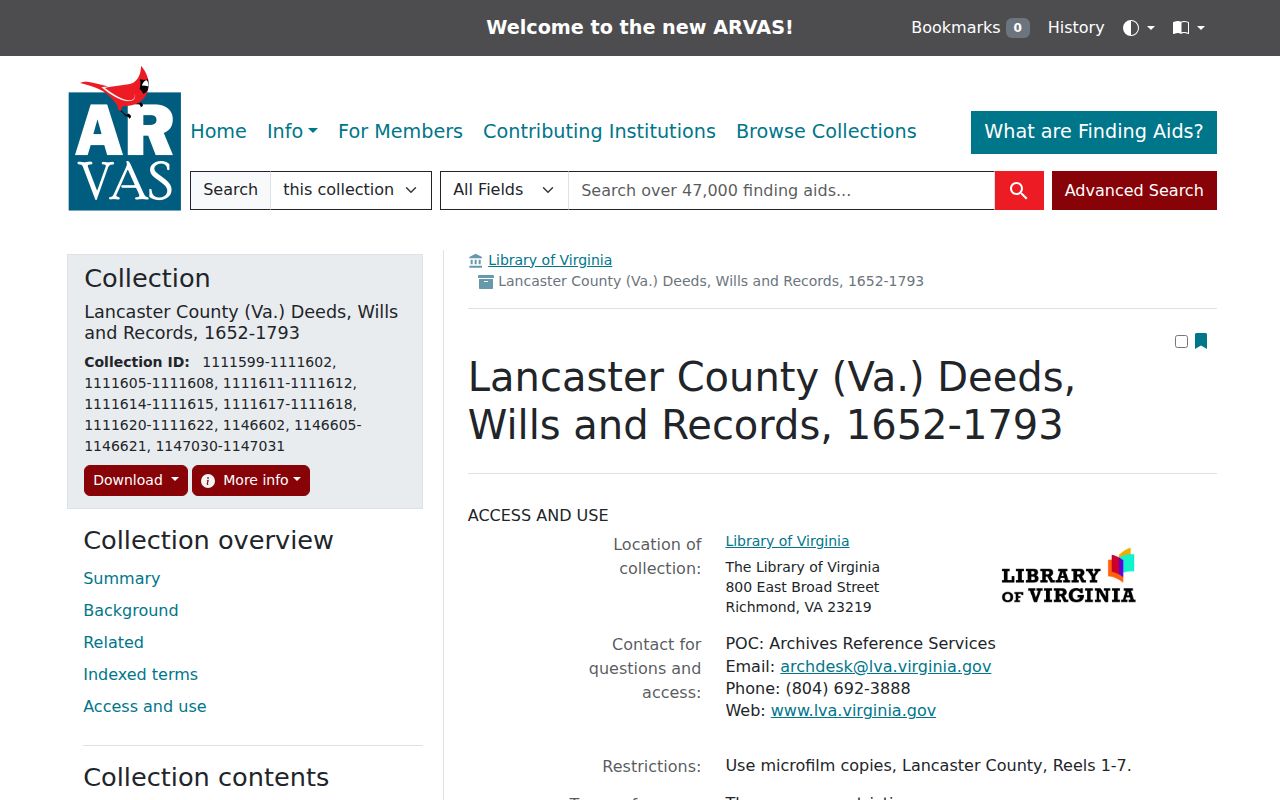
Sometimes an estate document bridges a deed chain. The Library of Virginia Lancaster County catalog identifies deed, will, court, tax, marriage, and fiduciary reel groups. Use it to find the right reel group.
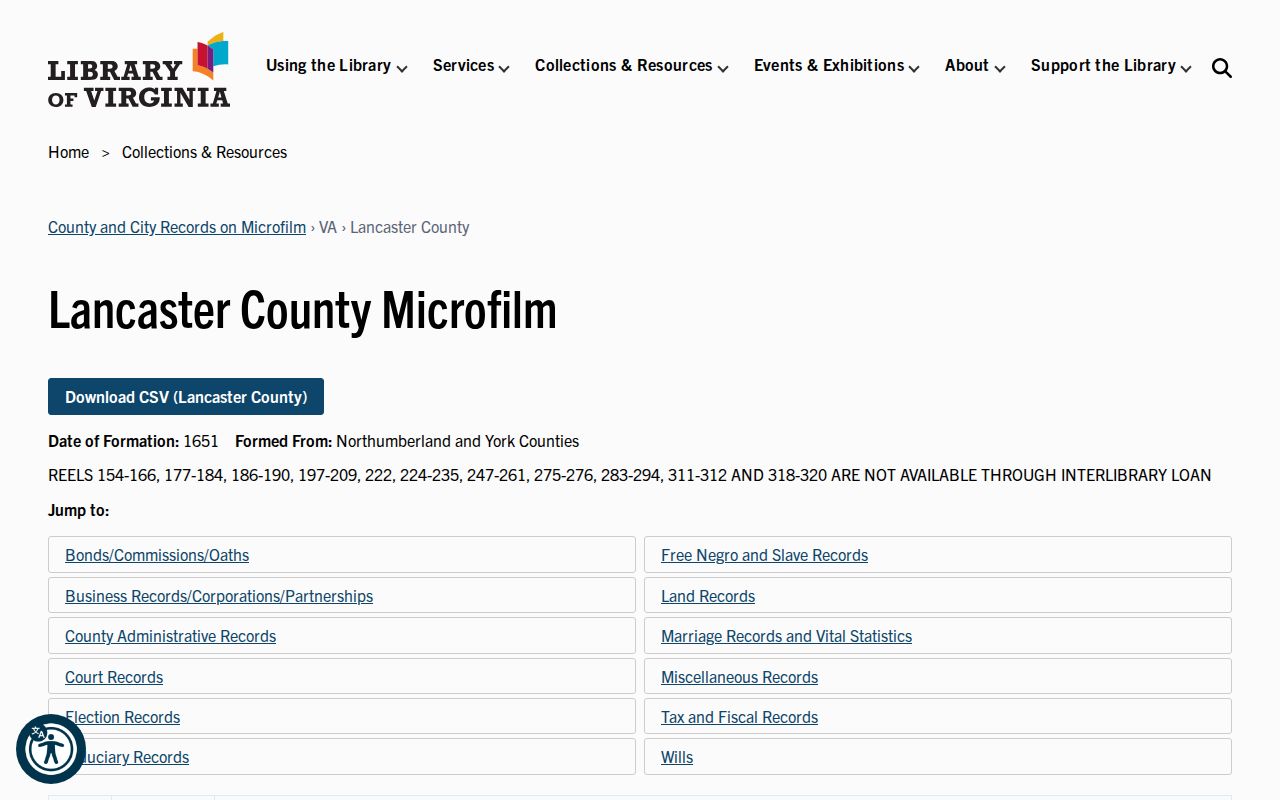
Locate the relevant reel in the catalog first. Then ask whether it can be viewed or borrowed before you arrange a visit.
Estate Events in Lancaster County Ownership History
A deed chain may stop at a death. The Dunton Library Estate Records Project abstracts 1,343 documents from 1835-1865, covering 520 decedents, 1,755 beneficiaries, and 318 spouses. Those abstracts point to probate events and family links. The underlying clerk records and deeds remain primary. Search the decedent, the executor or administrator, the heirs, and the property description. The current parcel owner rarely appears under one simple surname.
The LVA reel catalog includes wills and fiduciary records. Early volumes add inventories, appraisals, and settlements. Such records explain a transfer when a grantee later appears under a different family name.
Old Lancaster County Descriptions and Addresses
Old deeds in Lancaster County rarely carry a modern street address. Instead they lean on metes and bounds, acreage, a creek, a road, and the names of neighboring owners. A current GIS map will not always match that historic wording. Set the recorded description beside a plat. Set it beside a map book, the adjoining land, and any known road or watercourse. The Library of Virginia catalog also notes something about some early volumes. They leave the deed book or reel index unnumbered or tucked at the back.
Dunton Library is a strong starting point. Its courthouse microfilm reaches back to 1651. Local indexes, abstracts, and county history material sit alongside the reels. The Library of Virginia catalog describes each reel in detail. Some reels cannot be borrowed through interlibrary loan, so confirm local availability before planning research.
Old road and stream names still earn their keep. They can show whether two deeds share the same acreage. The test holds even when the modern situs address differs from the historic one. Treat those landmarks as clues, never as a substitute for a survey. Keep the grantor, grantee, date, acreage, and adjoining owners together in your notes. A later deed can then be compared with the earlier parcel without depending on a contemporary mailing label.
Remote Search Limits for Lancaster County Deeds
Virginia SRA lays out the statewide access model. A locality may offer a free land-record index while reserving images for clerk-authorized subscribers. Lancaster County lists no cutoff or image years. A blank online result can mean several things. The instrument may predate the index, the name may have been indexed differently, the parcel description may have changed, or the record may need an in-office search. Ask the Clerk about the true range.
For the broader process of locating one deed or requesting a copy, turn to the separate Lancaster County deed-records page.